Loading content gate...
They’ve put me in this cage so they can stare. Whether it’s the broad shoulders, the newly pronounced chest and ass, or the genitals everyone seems to obsess over, they all find something to oggle at. Every year I am told to become visible, legible, so they can stare. Every year I am told it is a gift for people like me. I am to be seen. Isn’t this enough?
Capitalism thrives on our visibility: it’s an easy sell. They couldn’t give trans people what we had been fighting for in the decades prior: socialized medicine, free housing, and bodily autonomy. These all threaten the bottom line. So they traded down for visibility. Sorry, we can’t give you free healthcare, but we can give you this mass produced trans flag! Sorry, we can’t give you free and fair housing, but we can add a poorly written trans character to our show! Sorry, we can’t respect your right to change your body, but we’ll use the right pronouns at work (at least once)! This is to say nothing of the pornography that fetishizes us, especially in the states that hate us most.
I’d be lying if I said visibility wasn’t intoxicating. I played into their hands too. Whether it was the ability to choose my genitals in a videogame or a new trans character haphazardly slapped into a Netflix show, I fell into my fair share of traps. But eventually the next day came, and the hangover was brutal. Being seen meant being legible, being legible meant subscribing to cisheteronormativity, and subscribing to cisheteronormativity meant denying my own agency. Whether it’s assumptions about about how trans people experience themselves, assumptions about how visibility “helps,” or assumptions about “acceptable transness,” I’m given no room to move.
I am tired of being seen. The stipulations are endless and suffocating. Perceive me or don’t, I don’t give a fuck. What I want is the ability to take meaningful action. What I want is to enact change for myself and my community. See me? Fuck that. I want you to feel me.
Authenticity That Goes Beyond My Genitals
There isn’t a lot of room for me to move in here. For the privilege of being in my precious cage, I had to ascribe to a discourse that doesn’t fit: that I am trapped in the wrong body. I don’t hold it against my trans siblings who feel this description fits them, but against the cis assholes who forced me into this box so I can be ‘legible.’ They understand that our communicative framework for gender means that we hide our genitals under our clothes while signifying what genitals we have with the clothing we wear. ‘Trans’ just means I have the wrong genitals under this skirt.
J.J. Macfield of The Missing can feel the claustrophobia too. While she may be more accurately described as ‘being in the wrong body,’ it brings her little comfort. In fact, she knows it has set her up to be devoured by bigots. Whenever her Mom goes through her closet or a classmate gets a little too close, the panic ensues. Understanding that “clothing signifies genitals” gives insight into our anxieties. In that framework, her and I can only ever be deceivers. Our bodies may never match the clothing we wear on top of them. We both know that if this ‘deception’ is ever exposed, it has deadly results.
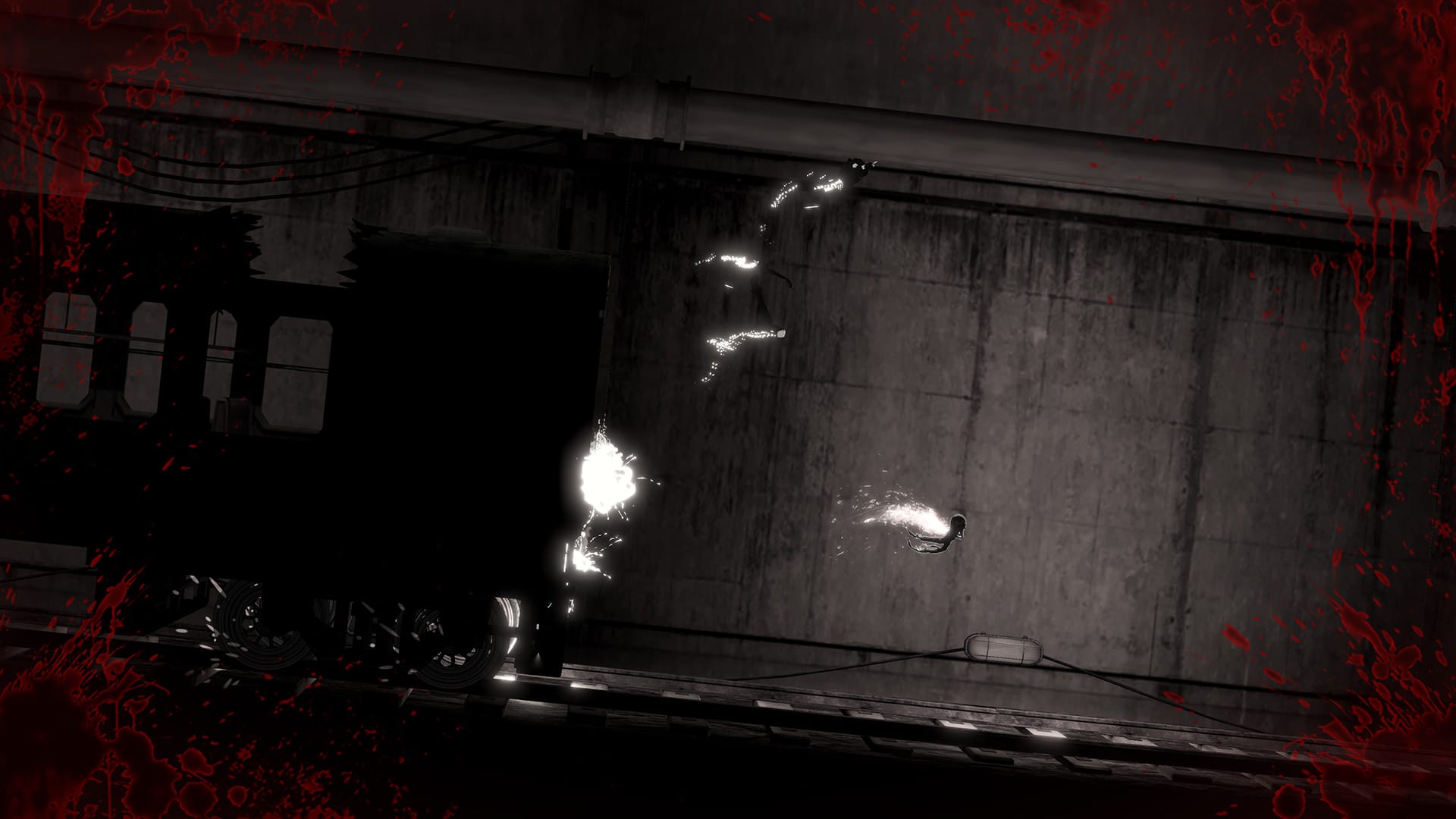
To navigate the maze of deception thrust upon her, J.J. tears her body apart and pieces it back together over and over again. The hellscape she navigates was brought on by a suicide attempt, a suicide attempt caused by bullying, ostracization, and conversion therapy. Every obstacle that requires her to break her neck, rip off her leg, or throw a severed arm was built by a mountain of expectations for what a woman “should” be. Every obstacle is a reminder of why she tried to take her own life.
But J.J. has shown me a way out, a way through to our authentic selves. Not authentic in the sense of a single, fixed identity based on having the wrong body. Rather, she displays an authenticity built by following a “A contingent, winding path,” where one makes a conscious “choice to reshape [their] public gender identity” when and how it is appropriate for them.
At the end of her journey in The Missing, J.J. sits on the floor, bloody, topless, and presenting in a traditionally masculine manner. As inscrutable as it would be to identify as a woman under these conditions, J.J. does it anyway, stating “I think I finally understand who I am now.” The worst of cishet harassment led her to the brink of death, and she fought through their bullshit, coming out the other side with a better understanding of who she is.
I wish that no other trans person would have to experience the horrors J.J. lived through. I truly wish our paths were filled with only love and flowers. That is not the reality we live in, and we each arrive at the decision to embrace our identities at our own pace. But even in the worst of times, we have a choice to remake ourselves. J.J. chose to pursue a life as a woman. May you wake up every day and choose for yourself.
We Were Born to Build Queer Entanglements
Despite the ways trans people suffer being on full display, many think that merely witnessing is enough. Acting as though having seen and cried over our trauma did something, ‘allies’ are content to move on from the scene’s of our despair. When they witness us again one year later, new laws constricting bodies with excessive force, they’ll put on the same play, ignoring how much worse things have gotten.
This act of empathy is not just empty: it is appropriative. My experience is ripped away from me “under the banner of empathy,” packaged into digestible bits, and fed to cishets for catharsis. My community will receive nothing from their tears.
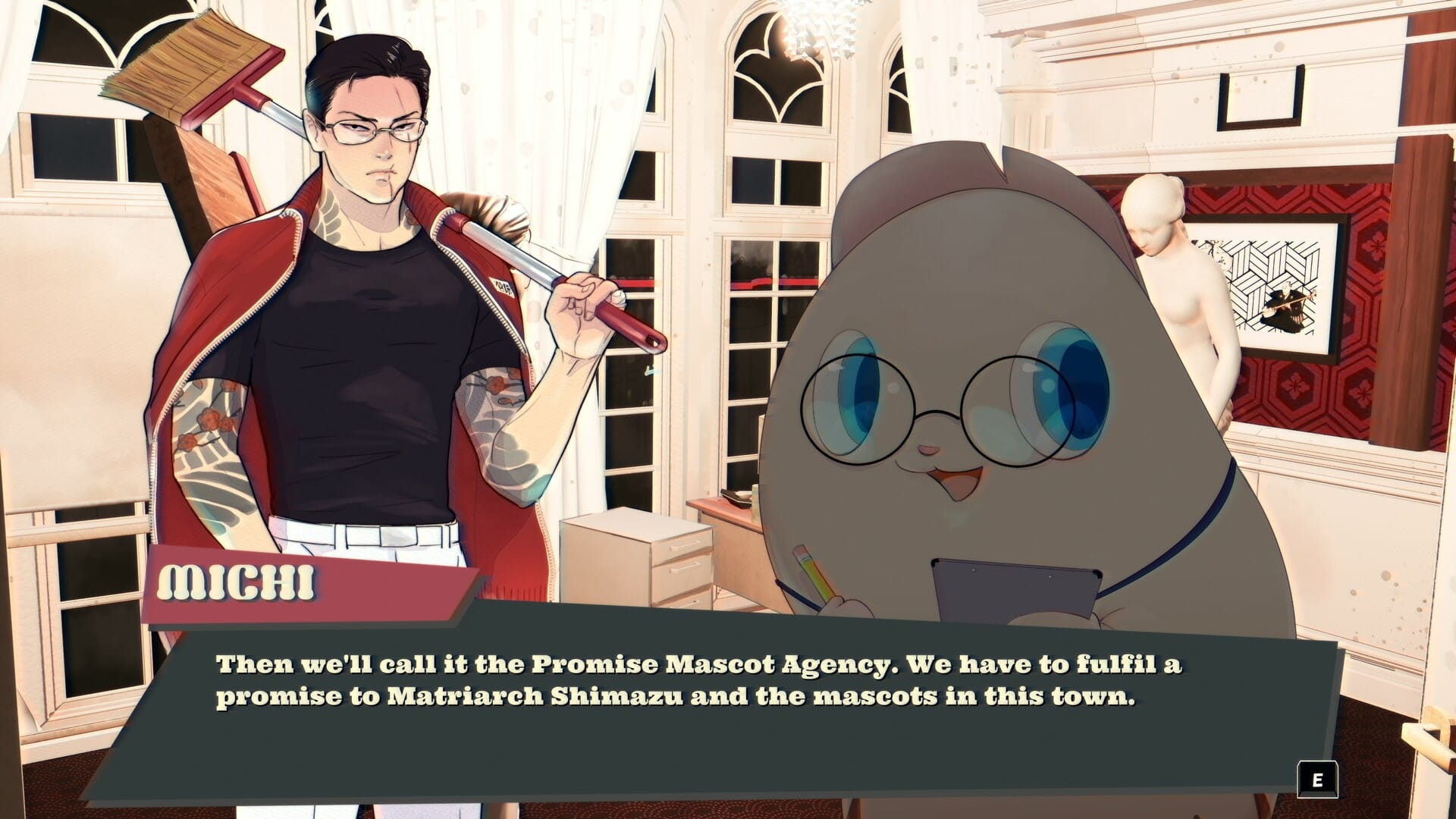
Michi of Promise Mascot Agency knows this instinctively. He is not an ally and is not content with empathy. He is a co-conspirator, here to act on the strong feelings he has for the downtrodden and to work with the community to make dreams happen. The mascot Trororo wants to open a new adult video shop. Rather than scoffing at the idea, Michi helps him, providing Trororo with a community space and simultaneously starting the revitalization of Kaso-Machi’s town square. Working with the town clerk Sato, Michi fights the corrupt mayor. Doing so not only helps Sato, it gives his friend Pinky new skills and helps the teacher Miss Wambui push back against the men who make her job hell. By the end of the game, not only do all these people begin to act for themselves, they begin giving Michi and the rest of the community whatever help they can.
What Michi helped strengthen was a community wide queer entanglement, “a network of individuals connected by a series of knotted paths that is not straight and cannot be straightened.” The winding and deeply interconnected relationships of Kaso-Machi were not created by him; they already existed. Michi was a catalyst, giving the support people needed to act on the connections they already had.
No one needs to work as hard as Michi. His tireless work ethic is a product of fantasy built to present a basic fact: if we can lend anything to help lift the weight of life, even a pinky, our communities will have more room to act on their hopes and dreams. Many hands make light work, after all. My friends and I will spend this “day of visibility” sharing food with our community, giving people a friendly face and a little free energy to help take on their day. What small lift could entangle you in your community?
I Am Capable Of Choosing for Myself
The thing ‘allies’ forget about visibility is that bigots can see us too. Under an onslaught of accusations about my mental health, my failure to “transition properly,” and alleged status as a groomer, it is hard to maintain an accurate view of who I am. It took years to decide to transition, and many more years to decide it was the right choice. Even then, some days the mirror can only show me a brutish man with shitty eyeliner and no hips. I wonder if I am truly capable of choosing for myself.
When you are raised in a system that hates you, one that most often acknowledges your existence as a joke, you come to believe that is all you are. It seems easier to bury yourself and stay on a “normal” path. Navigating the norms already laid out for you, it almost feels like agency. On this path, people will treat you like a human. At least, it will feel that way, until you come up against the impossible choice between the things you love and a recognition of your humanity.
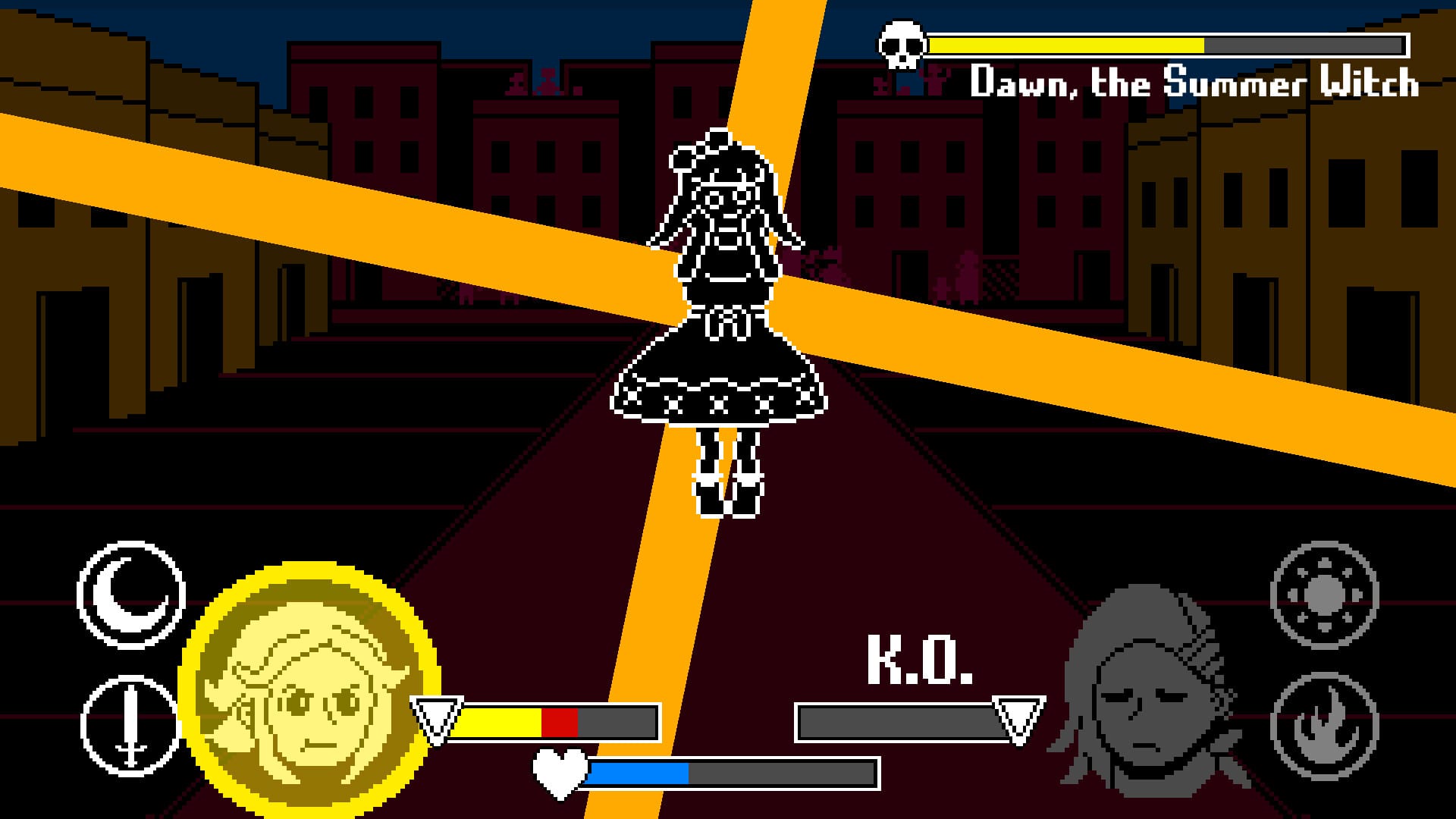
Sophie of Bossgame was raised all her life to believe in the teachings of her church. She was so devout to Mammon that when she transitioned, the church decided to let her stay, recognizing her as “one of the good ones.” But her legibility to the church came at a cost. When she had to choose between the church and her friend Dawn, she chose the church. When her oldest friend Mirra reveals themself to be a devil, she fights them rather than hearing them out. When her churchmother attacks her girlfriend, she chooses to run rather than stay by her side.
Sophie was so dedicated to the visibility and personhood the church gave her that she ignored the rot underneath. After falling out with her girlfriend, she states, “If I followed her [the churchmother], if I worked hard, I was doing good. I WAS good. And if I was good enough… maybe I deserved to be alive.” That’s what it comes down to, ultimately: who deserves to be alive. Visibility and acceptance by the dominant systems we live under feel like an authorization: I have made myself legible and acceptable, I deserve to live. But it is a trap filled with rot. As Bossgame reminds us, “Rot begets rot. You’ve been treated rottenly, and now it’s growing inside you.”
The government does not give you personhood. Your religion cannot determine your humanness. Nazis on the internet do not get to decide who qualifies as human. Your humanity starts with you. It is defined by you and spread through the love you share with your community. It isn’t easy: Sophie only found her way back through difficult conversations, apologies to those she harmed, and long hard looks in the mirror. It will be a challenge, but you can find a life outside their rot.
Act With and For Yourself
I’m not going to lie, shit is pretty fucking dark right now. I am afraid. That fear makes acting difficult. But a lack of action is the point of the fascists creating fear: the less we do, the more effectively they can push their bullshit agenda on everyone.
I won’t claim to totally disavow visibility, and I will never advocate for invisibility. If we are not visible, trans kids will think they are alone. If we are not visible, it increases the risk that a persons first interaction with queerness is violence. If we are not visible, the sense of community I so love will become hushed tones whispered in the back of a dark bar. I don’t want that for anyone. But I’m tired of pretending visibility is the solution to all our problems.
Visibility should be a happy accident that goes along with our actions, not the main point of them. When we feed our community, fight for healthcare, or shout down a shit-head nazi, we are visible. I would argue it is when we shine brightest. These actions focus on the most important thing first: protecting our community. The fact that we look sick-as-fuck doing it is just a bonus.